
|
|
|||||||||
Congenital Hearing Loss and Infant Hearing ScreeningTesting your Newborn’s Hearing
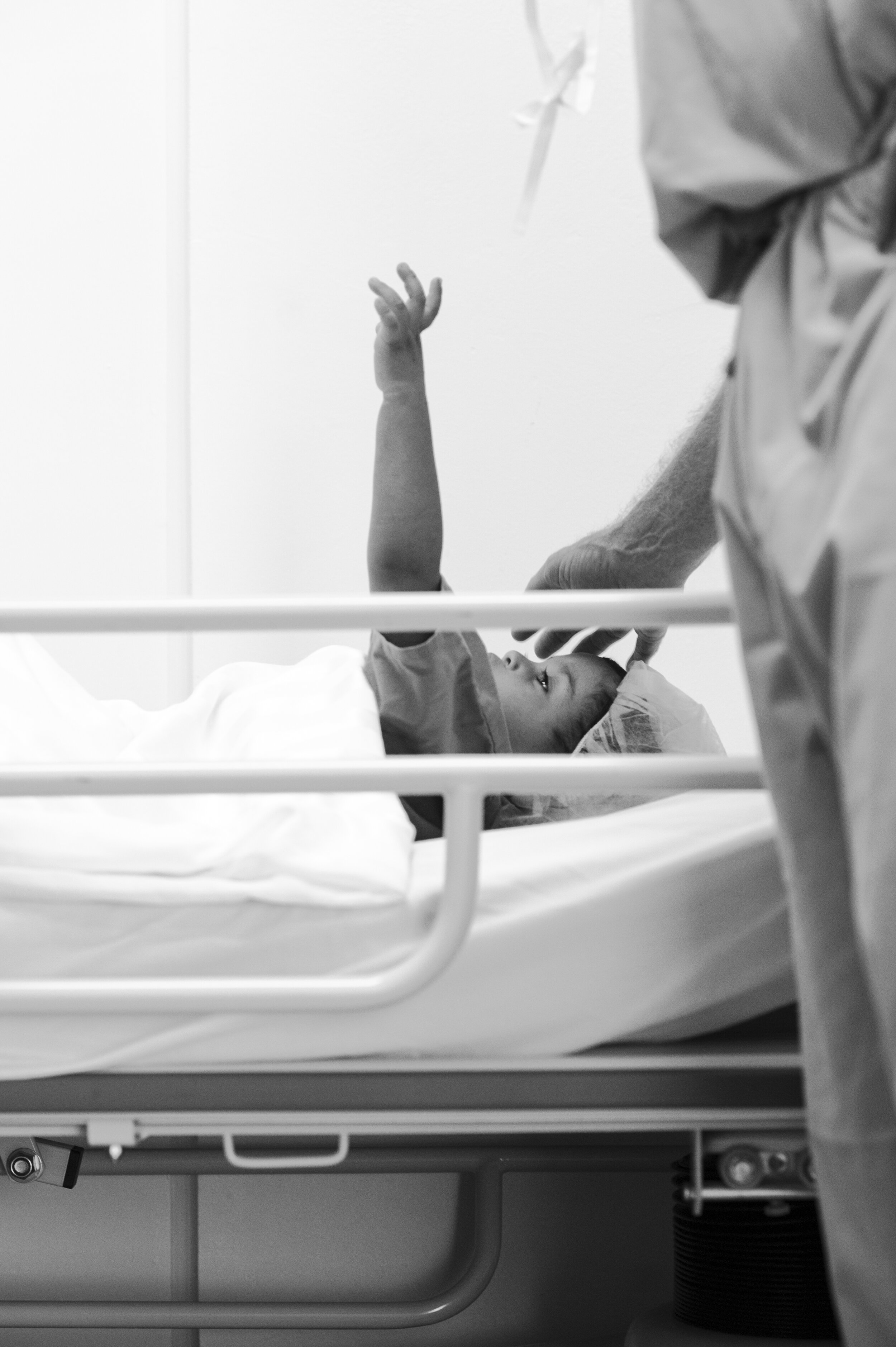
The tests are simple and painless. It is very important to know if an infant has any hearing loss, because early detection and treatment can mean the difference between normal and delayed development. The two most common tests are Otoacoustic Emissions (OAE) and Auditory Brainstem Response (ABR). Otoacoustic Emissions (OAEs) test the baby’s hearing by placing a small microphone and earphone in the ear. Sounds are played into the ear and the response is measured. If the baby hears normally, there will be an echo that is picked up by the microphone. If there is no echo, the baby could have a hearing loss. Auditory Brainstem Response (ABR) measures the brain’s ability to perceive sound. The baby is fitted with small electrodes placed on her head. The electrodes can pick up brain activity and will measure brain response when sounds are played into the baby’s ear. Some hospitals may use both tests, and some may use the ABR as a backup when the baby fails the OAEs. Both tests are accurate, and are a good indicator that your baby has normal hearing. It is possible, however, for a baby with some hearing loss to pass these tests. Mild hearing loss only affecting a few frequencies may not be detected by the test. There are also genetic conditions that only affect hearing after the newborn period. So always keep vigilant for any sign that your baby is not hearing properly. If your baby does not pass the initial test, there is still a good chance that she has normal hearing. About 2 to 10 percent of babies with no hearing loss do not pass the initial screening test. The reasons could be that there is fluid in the ear, or perhaps the baby was crying during the testing. In total, only about .2% of all babies, or about 2 per thousand, are born with hearing loss. If your baby does not pass the initial testing she will be referred for more intensive testing to determine if in fact she has hearing loss. The first step in more thorough testing will be a diagnostic Auditory Brainstem Response. The first ABR that your baby had was a screening ABR. The diagnostic ABR will be more thorough. It will determine the softest sounds the baby can hear. If the baby is restless, he may be given a mild sedative to make sure his body movements or crying do not interfere with the test. If the baby passes this test, his hearing is normal and there is no need for further testing. Always remain alert, however, for any changes in behavior that may signal a hearing loss. CT / MRI ScansTo determine the cause of the hearing loss, the doctor may order a CT scan, an MRI scan, or both. A CT (computed tomography) scan will show the bony structures of the ear, and will determine if the cochlea is malformed. An MRI (magnetic resonance imaging) scan shows the soft tissue, and can determine if there is a tumor or other physical cause of the hearing loss. The information obtained with these scans can determine how the hearing loss is going to be treated. If the infant needs a cochlear implant, the CT scan will show the structure of the cochlea to aid in the implant procedure. Genetic Testing |


Having your newborn’s hearing tested before they leave the hospital is not only a good idea – in many cases it is mandatory. Many states require all newborns to be tested within the first two months of birth, but regulations vary from state to state.
